AI Chatbot App
Development

Stateside Digitals builds custom AI chatbot apps for businesses, enterprises, and regulated industries across all 50 states, covering retrieval-augmented generation, human escalation design, and the evaluation infrastructure that tells you whether the answers are actually correct.

Why The AI Chatbot Market Needs The Right App

A customer who asks a chatbot a question and receives a confident but wrong answer leaves the conversation with wrong information and a diminished view of the business it represents. The problem is not the technology — it is that most AI chatbots are deployed without defining what they may answer, where they should stop, and how they should hand off to a human when the question is beyond the boundaries they were built for.

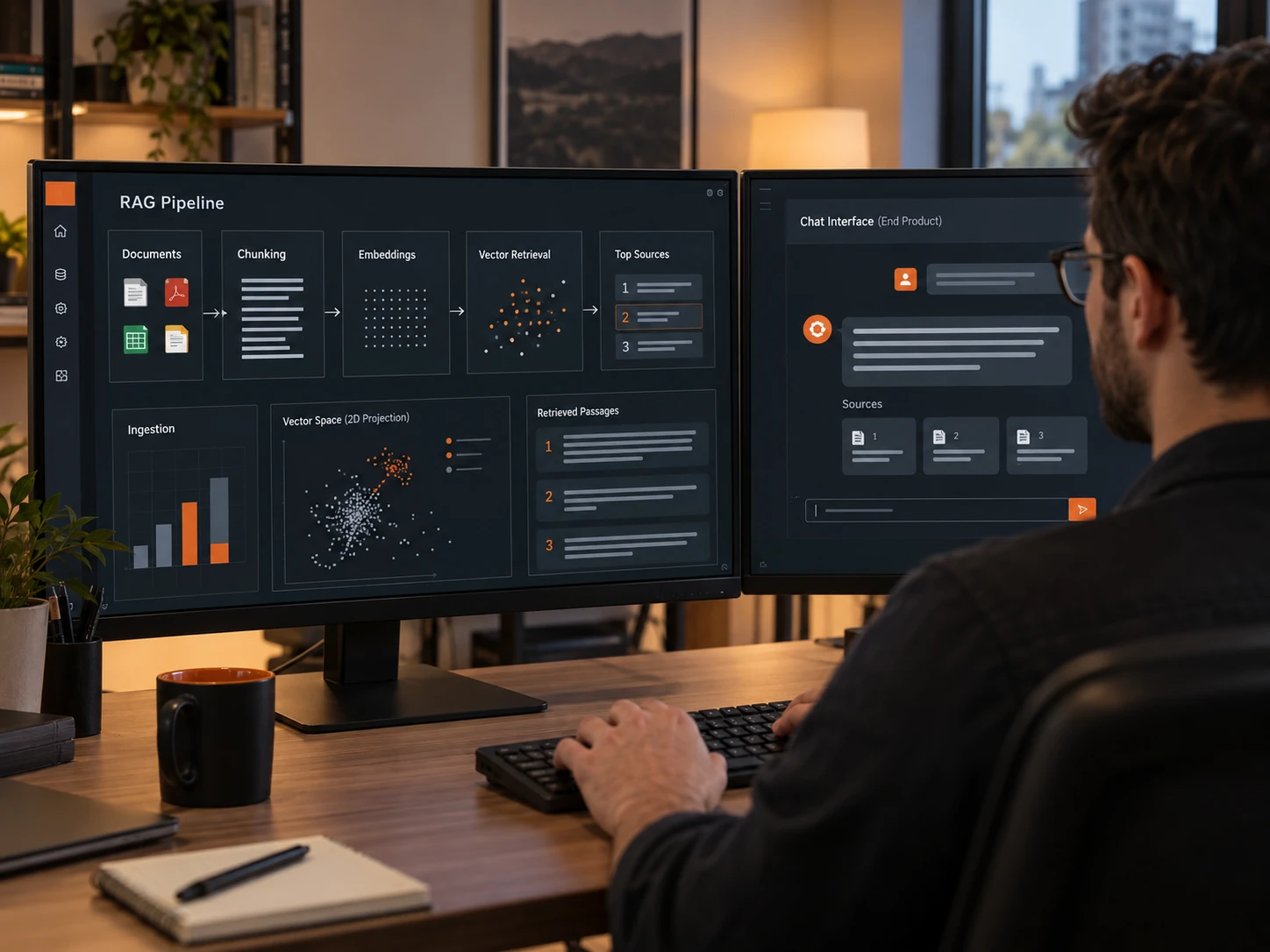
A chatbot that answers from your own documentation, product content, and support history is a fundamentally different product from one answering from a model’s general training data. The first is specific, verifiable, and improves as your content improves. The second is confident about things it does not actually know about your business. Building the first requires retrieval architecture that most generic chatbot platforms either do not offer or implement poorly.

Our AI Chatbot
App Development Services

01

Conversational UI and Handoff

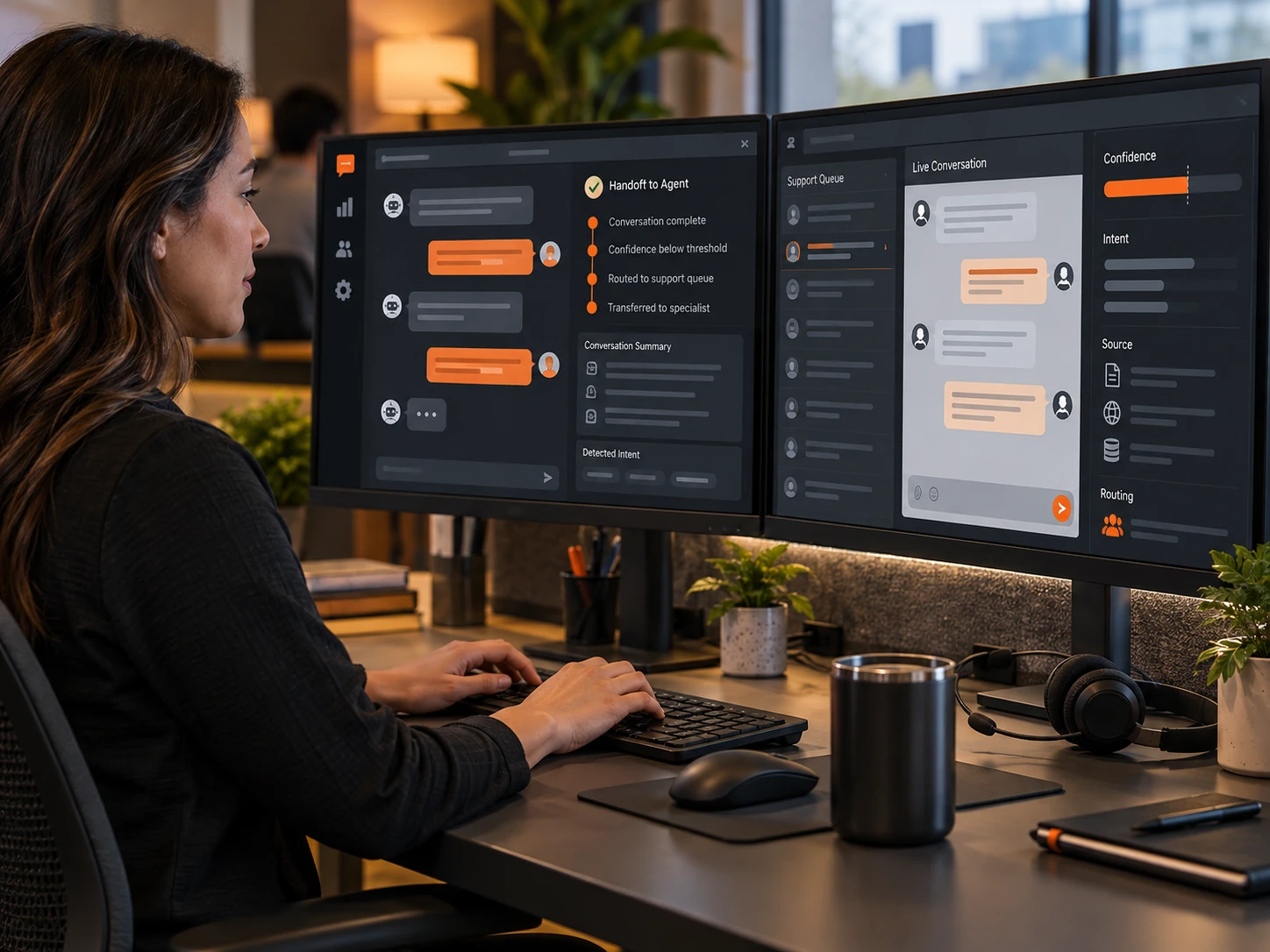
A chat interface that feels natural to use, surfaces sources alongside answers, and escalates to a human agent when the question is outside what the chatbot can reliably answer.

03

Integration and Workflow Tooling

Connecting the chatbot to your CRM, your helpdesk, your product database, and your escalation workflow so it functions as part of your operation rather than alongside it.

AI Chatbot App
Models We Build

Three chatbot models cover most of the market. The accuracy bar, the compliance requirements, and the escalation design differ significantly between them.
01

Customer Support Chatbot

A customer-facing bot that handles common support queries from your documentation and help content, deflects routine tickets, and escalates to a human agent with context when it reaches the edge of its knowledge.

02

Internal Knowledge Assistant

An employee-facing bot that answers questions from internal documentation, policies, process guides, and institutional knowledge that currently lives in a shared drive nobody searches effectively.

03

Domain-Specific AI Advisor

A specialist chatbot for legal, financial, healthcare, or other regulated contexts, with tightly scoped source material, explicit confidence thresholds, and mandatory human review for high-stakes responses.

The Kind Of Experience
Users Already Expect

A user who has interacted with a well-built AI assistant arrives at a new chatbot with a specific test: ask something specific and see whether the answer is accurate and sourced or confident and vague. A chatbot that cites the article its answer came from earns more trust than one that states the same answer without attribution, because the citation lets the user verify rather than accept. That is a design decision, not a model capability, and it is built into every chatbot we deliver.

In regulated sectors the expectations are more specific. A healthcare chatbot that gives medical advice without qualification creates liability regardless of how accurate the answer happens to be. A financial chatbot that presents investment guidance as a recommendation rather than information crosses a regulatory line. A legal chatbot that gives jurisdiction-specific advice without a disclaimer creates professional responsibility concerns. We design the escalation and the disclaimer logic alongside the retrieval layer, not after it.

Key Features We Build, By User

05 features
  • Natural language question input
  • Answers with source citations and confidence signals
  • Follow-up question handling in context
  • Human escalation request at any point
  • Conversation history and session continuity

How Much Does An
AI Chatbot App Cost?

Cost depends mainly on how much source content needs indexing and how strict your compliance and escalation requirements are. As a general guide:
01

Support Bot on Existing Product

A chatbot integrated into a website or app, answering from a defined content library with human escalation. These typically fall in the mid five-figure range and take eight to fourteen weeks.

02

Internal Knowledge Assistant

An employee-facing chatbot with document ingestion, access controls, and integration into internal systems. These sit in the mid to high five-figure range with a twelve to twenty week build.

03

Regulated Domain AI Advisor

A specialist chatbot with compliance constraints, human review workflows, and audit logging for legal, financial, or healthcare contexts. These run into the high five-figure to six-figure range.

These are market ranges, not fixed quotes. We give you an itemized number after a short discovery call.

Every tier includes a defined evaluation framework. If you cannot measure whether the chatbot is right, you cannot know when it becomes wrong.

How We Work

01Discovery

We map your source content, your compliance constraints, your escalation workflow, and your definition of a good answer before any design decisions are made.

02Design

We prototype the conversation flow and the escalation handoff before development starts, testing the retrieval accuracy against your actual content specifically.

03Development

We build in sprints with regular check-ins, with the RAG pipeline and evaluation framework built alongside the conversational interface rather than after it.

04Testing

Every build goes through answer quality evaluation against a test set of real questions before release so retrieval failures and hallucination risks are found before users find them.

05Launch and Support

We handle deployment and stay on for content updates, model version changes, and the new question patterns that emerge after real users start asking things the test set did not cover.


Technologies We Use
For AI Chatbot
App Development

We build chatbot interfaces in React for web and React Native for mobile. The RAG pipeline runs in Python using LangChain for orchestration and the OpenAI API for generation, with pgvector or Qdrant for vector storage depending on scale. The backend routes conversations through Node.js. Document ingestion handles PDF, Word, HTML, and plain text sources. Model providers include OpenAI, Anthropic, and open models via Hugging Face depending on your data residency and compliance requirements.
  • React
  • React Native
  • Python
  • Node.js
  • TypeScript
  • JavaScript
  • pgvector
  • Document Ingestion
  • RAG Retrieval
  • GraphQL
  • Redis
  • AWS

Why Choose Stateside Digitals For
AI Chatbot App Development

Frequently Asked Questions

How do you stop the chatbot from making things up?

By grounding every answer in retrieved content rather than the model’s general knowledge. Retrieval-augmented generation pulls the relevant passages from your documents before generating a response, so the answer is based on what you have written rather than what the model was trained on. Sources are cited so users can verify rather than accept.

How do you know if the chatbot is giving good answers?

What happens when the chatbot cannot answer?

Can the chatbot access our live product or CRM data?

How is this different from your OpenAI and LangChain pages?

Let’s Start With
A Pilot

Tell us what questions your customers or staff ask most often, and we will scope an AI chatbot that answers the ones it should and escalates the ones it should not.

FILL THE FORM

Stateside Digitals
@2026
LET’s CONNECT