Swift App
Development Services

Stateside Digitals provides Swift app development services, building native software for iPhone, iPad, Apple Watch, and Mac using the language Apple built for its own platforms and its own engineers.

What Is Swift
And Why It Matters For Your Business

Swift is Apple’s programming language for building software across its platforms. It replaced Objective-C as the default and was designed around safety, which means whole categories of crash, particularly those involving missing or unexpected values, get caught while the code is being written rather than after your users have already found them.

For a business, that shows up as fewer production incidents and less time spent chasing faults that only appear on certain devices. Swift also compiles to native machine code with direct access to every framework Apple ships, so anything the platform can do, your app can do, without waiting on somebody else to build a bridge to it first.

Full Hardware Access

Every Sensor And API

Camera, secure enclave, motion sensors, and background modes are all directly available, with no plugin layer sitting between you and them.

Safer By Design

Fewer Crashes In Production

Swift’s type system forces uncertain values to be handled at the point they are written, removing a common cause of crashes entirely.

First To New Features

Ready On Launch Day

New Apple frameworks are usable the day they ship, so your app can adopt them while cross-platform projects wait for support.

01

Performance-Critical Apps

Camera work, on-device machine learning, audio processing, and anything where a dropped frame is something the user actually feels.

03

Hardware Integrations

Apps paired with accessories, medical devices, or industrial equipment over Bluetooth, where connection reliability decides everything.

SwiftUI Or UIKit:
Which Should Your App Use?

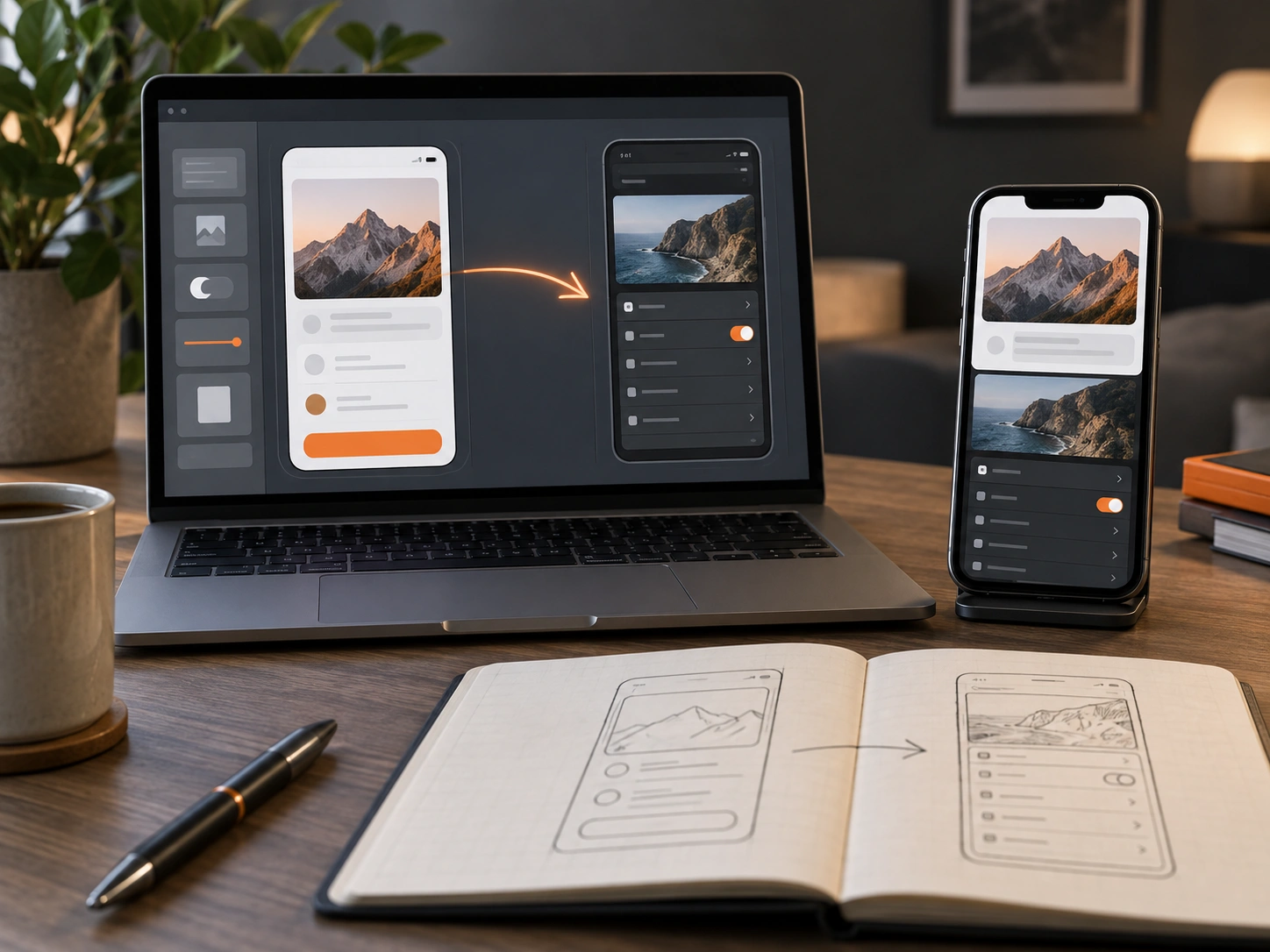
SwiftUI is Apple’s current framework for building interfaces and clearly where the platform is heading. It describes screens in far less code, previews changes live while a developer works, and covers iPhone, iPad, Mac, and Apple Watch from largely shared definitions. For most new apps it is the sensible starting point.

UIKit is older, larger, and still the better tool for some jobs: heavily customized layouts, complex list and collection behavior, and apps that must support older iOS versions than SwiftUI handles comfortably. In practice we use both, since they interoperate inside one project. The decision belongs to individual screens rather than the whole app.

Inside Our Swift App
Development
Services

We build in Swift with SwiftUI, dropping into UIKit where a screen calls for it. Concurrency uses async and await rather than layered callbacks. Persistence is SwiftData or Core Data depending on the app’s age, with dependencies handled through Swift Package Manager. Testing runs in XCTest, distribution through TestFlight, and releases are automated rather than assembled by hand.
  • Swift
  • SwiftUI
  • UIKit
  • Async/Await
  • SwiftData
  • Core Data
  • Swift Package Manager
  • XCTest
  • TestFlight
  • Xcode
  • Node.js
  • Python

Why Choose Our Swift App
Development Services

Apple ships a major iOS release every year, with new frameworks worth adopting and deprecations worth planning around. We follow the beta cycle, so September finds your app ready rather than surprised.

Frequently Asked Questions

Is Swift only used for iPhone apps?

No. The same language covers iPad, Apple Watch, Mac, and Apple TV, and a well-structured project shares most of its logic across them. That is usually the strongest argument for native Swift when your customers already own more than one Apple device.

Can Swift run on our backend too?

Do we need Macs to maintain the app?

Can any of this be shared with Android?

How soon can we use new iOS features?

Let’s Build Your
Swift App

Tell us which Apple devices your customers use and what the app needs to do, and we will scope Swift app development services to match your project.

FILL THE FORM

Stateside Digitals
@2026
LET’s CONNECT