Kubernetes
Development Services

Stateside Digitals provides Kubernetes development services for teams who have outgrown running containers by hand, and straight advice for the ones who have not yet, which is more of them than the industry admits.

What Is Kubernetes
And Why It Matters For Your Business

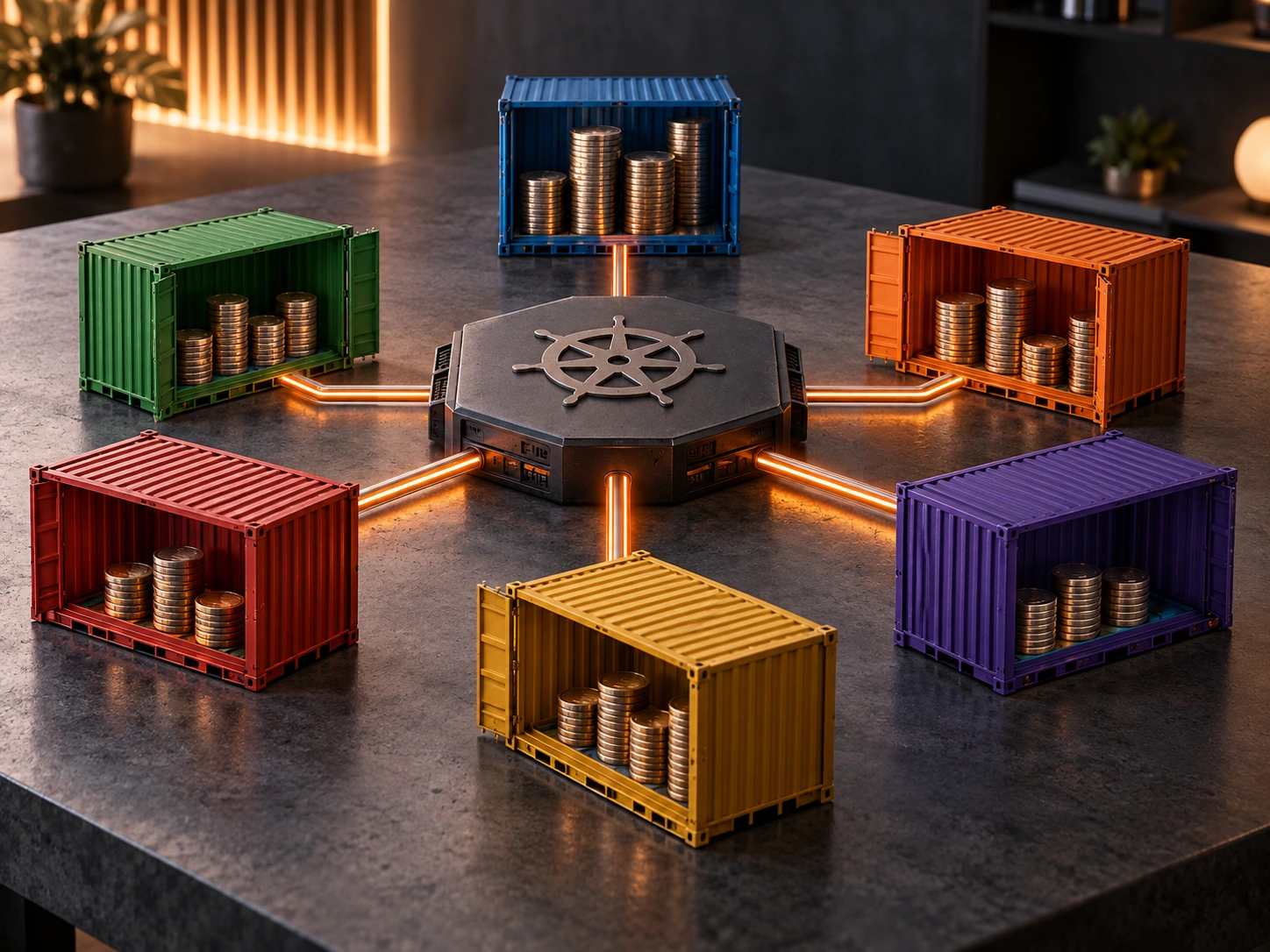
Kubernetes runs containers across a group of machines and decides where each one belongs. It restarts what fails, adds copies as demand rises, replaces old versions with new ones a few at a time, and routes traffic only to whatever is currently healthy. None of that requires somebody to be watching a dashboard when it happens.

For a business, that is genuinely valuable and genuinely expensive. Kubernetes solves problems that only appear at a certain size, and it brings in a system needing its own expertise to operate. The honest question is not what it can do, which is a great deal, but whether the things it does map onto problems you actually have right now.

Heals Without Waking You

Failed Containers Restart

A crashed service is replaced automatically, so a fault at three in the morning becomes a log entry instead of a phone call.
Runs Anywhere You Do

Same Setup On Any Cloud

The same configuration works across providers and your own hardware, which keeps a move between them a project rather than a rebuild.

Releases Without Downtime

Rolling Updates Built In

New versions replace old ones gradually while traffic keeps flowing, and a failing release stops rolling out on its own.

01

Many Services, One Platform

Dozens of services owned by different teams, each deploying on its own schedule without waiting for anyone else’s release window.

03

Regulated Workloads

Systems that must stay on infrastructure you control for compliance reasons, but still need the automation a managed platform gives.


Do You Actually
Need Kubernetes?

For most businesses running a handful of services, no. A managed container platform such as ECS, Cloud Run, or App Service will run exactly the same containers with a fraction of the operational surface, and we would rather say so than sell you a cluster you will then need help operating indefinitely. That is a subscription, not a solution.

Kubernetes earns its complexity under four conditions: many services deploying independently, teams that need to ship without coordinating with each other, workloads spread across more than one environment, or scaling patterns irregular enough that fixed capacity wastes real money. If two or more describe you, the overhead starts paying for itself. If none do, it is cost without return.

Our Kubernetes
Development
Services

We build on managed Kubernetes through EKS, GKE, or AKS rather than running control planes ourselves, provisioned in Terraform so a cluster can be rebuilt rather than remembered. Deployments run through Argo CD or Flux from Git, packaged with Helm. Ingress, certificates, autoscaling, network policy, and RBAC are configured deliberately, with monitoring through Prometheus and Grafana.
  • Kubernetes
  • EKS
  • GKE
  • AKS
  • Terraform
  • Argo CD
  • Flux
  • Helm
  • Ingress
  • RBAC
  • Prometheus
  • Grafana

How We
Run Clusters

Clusters usually turn unstable because nobody set resource limits, so one badly behaved service starves everything sharing its node. It is routine configuration and it is missing more often than not.

Frequently Asked Questions

What does Kubernetes cost to run?

More than the machines suggest. Beyond compute there is the control plane charge, load balancers, storage, monitoring, and the engineering time to operate it. That last one is the largest and the one most often left out of the comparison entirely.

Can we run it without a dedicated team?

Should we self-manage or use EKS, GKE, or AKS?

Can you take over an existing cluster?

Is Kubernetes overkill for one application?

Let’s Check
The Fit

Tell us how many services you run and what deployment currently looks like, and our Kubernetes development services can start by confirming whether you need them.

FILL THE FORM

Stateside Digitals
@2026
LET’s CONNECT